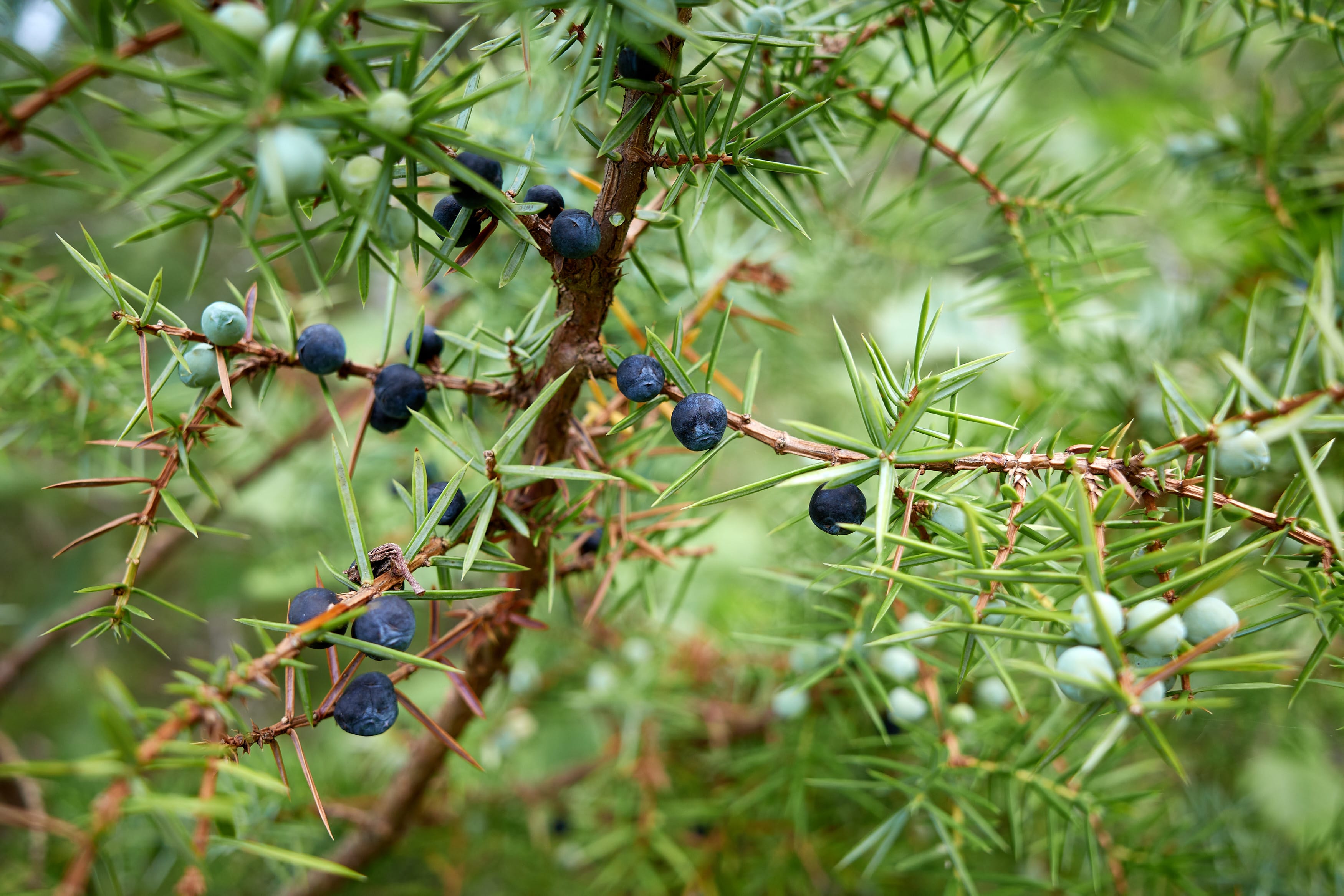
🌿 Common Juniper
Gewöhnlicher Wacholder
Juniperus communis L.
Common Juniper (Juniperus communis L.) is an evergreen shrub or small tree belonging to the cypress family (Cupressaceae). It is widely distributed across Europe, Asia and North America.
The plant is characterised by sharp needles and dark blue to black, berry-like cones. These so-called juniper berries usually take two to three years to ripen fully.
In traditional herbal medicine, the ripe juniper berries are the principal plant part used. They contain essential oils, bitter compounds, resins and other secondary plant substances.
Juniper has traditionally been used for digestive discomfort, flatulence and poor appetite. Diuretic properties have also been attributed to it.
Notes
Ripe juniper berries are traditionally used as a culinary spice and in teas, infusions and tinctures. Juniper essential oil is also used in various preparations.
Traditional internal medicinal use primarily concerns the ripe berries. Needles, shoot tips, wood and roots should not be considered equivalent or automatically safe alternatives.
Medicinal use should be avoided in people with inflammatory or severe kidney disease. It is also not recommended during pregnancy or breastfeeding.
Concentrated juniper essential oil should not be taken internally without qualified professional supervision. Undiluted topical application may cause skin irritation.
People with a known allergy to juniper or other ingredients in a preparation should avoid its use.
Effects
- antibacterial
- tonic
- metabolism-stimulating
- diaphoretic
- pain-relieving
- expectorant
- antifungal
- circulation-strengthening
- diuretic
- fungicidal
- blood-purifying
- blood-forming
- antiviral
Conditions
- loss of appetite
- gingivitis
- fluid retention
- digestive weakness
- heartburn
- poorly healing wounds
- rheumatism
- irritability
- psoriasis
- nervous heart complaints
- bad breath
- migraine
- menstrual complaints
- stomach weakness
- liver weakness
- varicose veins
- headaches
- sciatica
- cough
- gout
- gastritis
- common cold
- diabetes
- intestinal inflammation
- bloating
- bladder stones
- cystitis
- bladder complaints
- respiratory complaints
- arthritis
Application Areas
- respiratory system
- digestion
- metabolism
- urinary tract
- joints
Plant Parts
- berries
- Shoot tips
- root
- Needles
- Wood
Preparations
- infusion
- oil
- essential oil
- tincture
- tea
Contraindications
- allergy
- breastfeeding
- pregnancy
- kidney disease